


It’s said that we eat with our eyes first, or most, it happens subconsciously. We perceive the colors and textures. We assess the arrangement—the garnishes, the layers, the shape, even the plate itself. And, before a knife or fork breaks the form, expectations have been set. At Ganges—the Indian restaurant that opened in The Meadows in the fall of last year—what arrives at the table sets an expectation for high-concept dishes and bold flavors.And the food exceeds even its own lofty presentation on all fronts. Here, bright, striking colors signal extraordinary flavors that feel both familiar and entirely new. Aromatics remain the foundation of each dish, with complex notes of anise and cardamom, cumin and coriander, onion and mustard seeds—all the traditional scents of Indian cuisine. But the way Chef Satpal Singh and his team—who have worked in fine dining establishments in Toronto and New York City—have infused the unexpected into the menu deserves celebration.
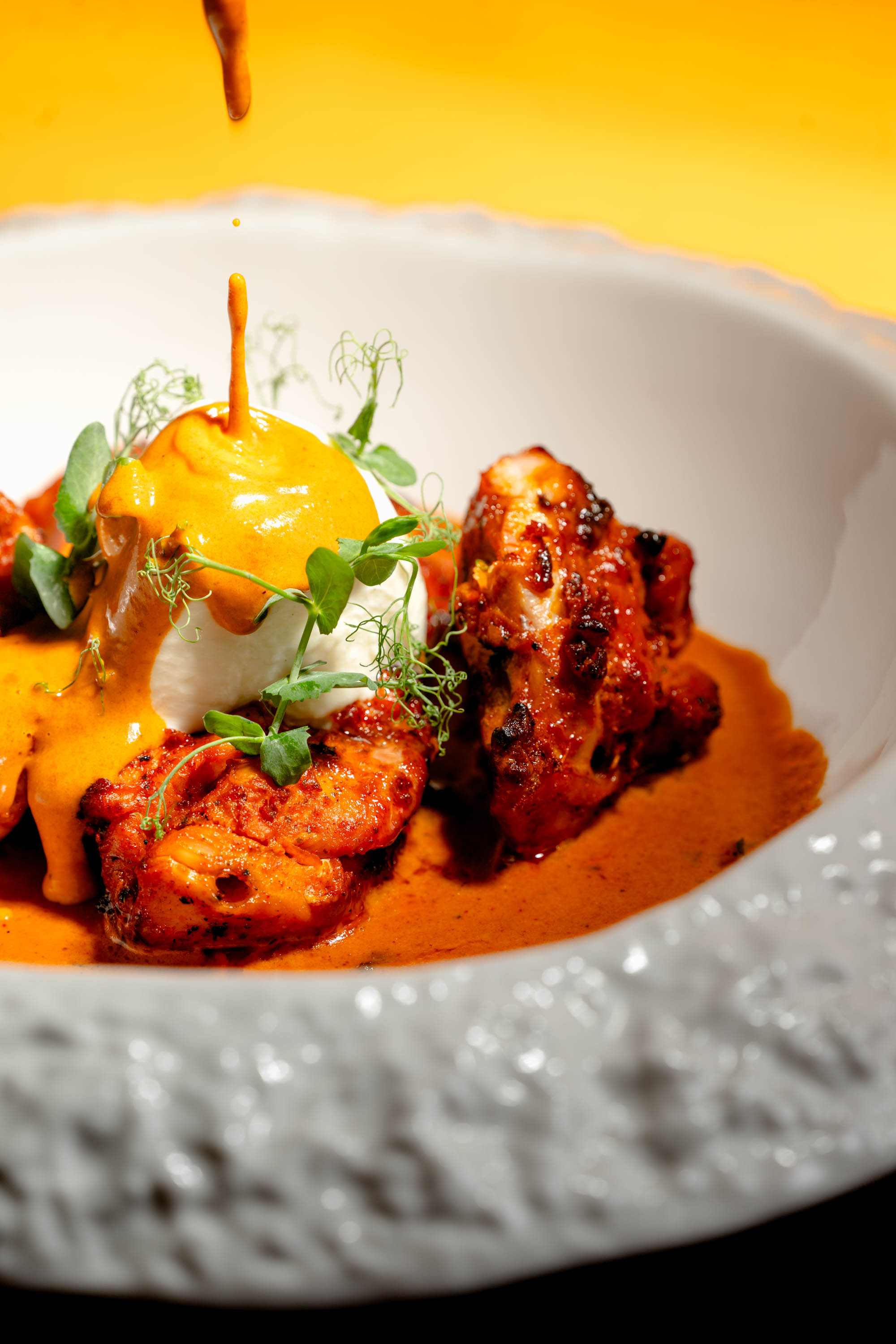
Take the appearance of “butter chicken” on the menu. The dish, most often served with basmati rice, is considered a staple of and gateway into Indian cuisine. At Ganges, it appears on the menu next to “pizza” and “burrata.” The butter chicken pizza comes served on flatbread, with the creamy, tomato-based makhani sauce replacing the marinara found on traditional pizzas. Then it’s topped with a bit of arugula and drizzled with a balsamic glaze. It’s a savory, unexpected fusion that successfully manages to satisfy a craving for both pizza and butter chicken. The burrata butter chicken skews a little more traditional, with the burrata perfectly complementing the already-creamy profile of the rich, orange sauce. When it arrives in its beautiful white bowl, the server pours piping hot makhani sauce over it to melt the cheese.
The gulabi kachori appetizer is equal parts fine art and savory pastry. A bright pink beet and yogurt sauce is poured over a thin, crispy shell, stuffed with spiced potatoes and chickpeas, and garnished with edible flowers, pomegranate seeds, and sprouts. It’s almost a pity to break into the shell, where the mild kick of the filling is further punctuated by the green chutney that comes on the side. It’s almost big enough to work as an entree on its own, but is better shared with two or more people.
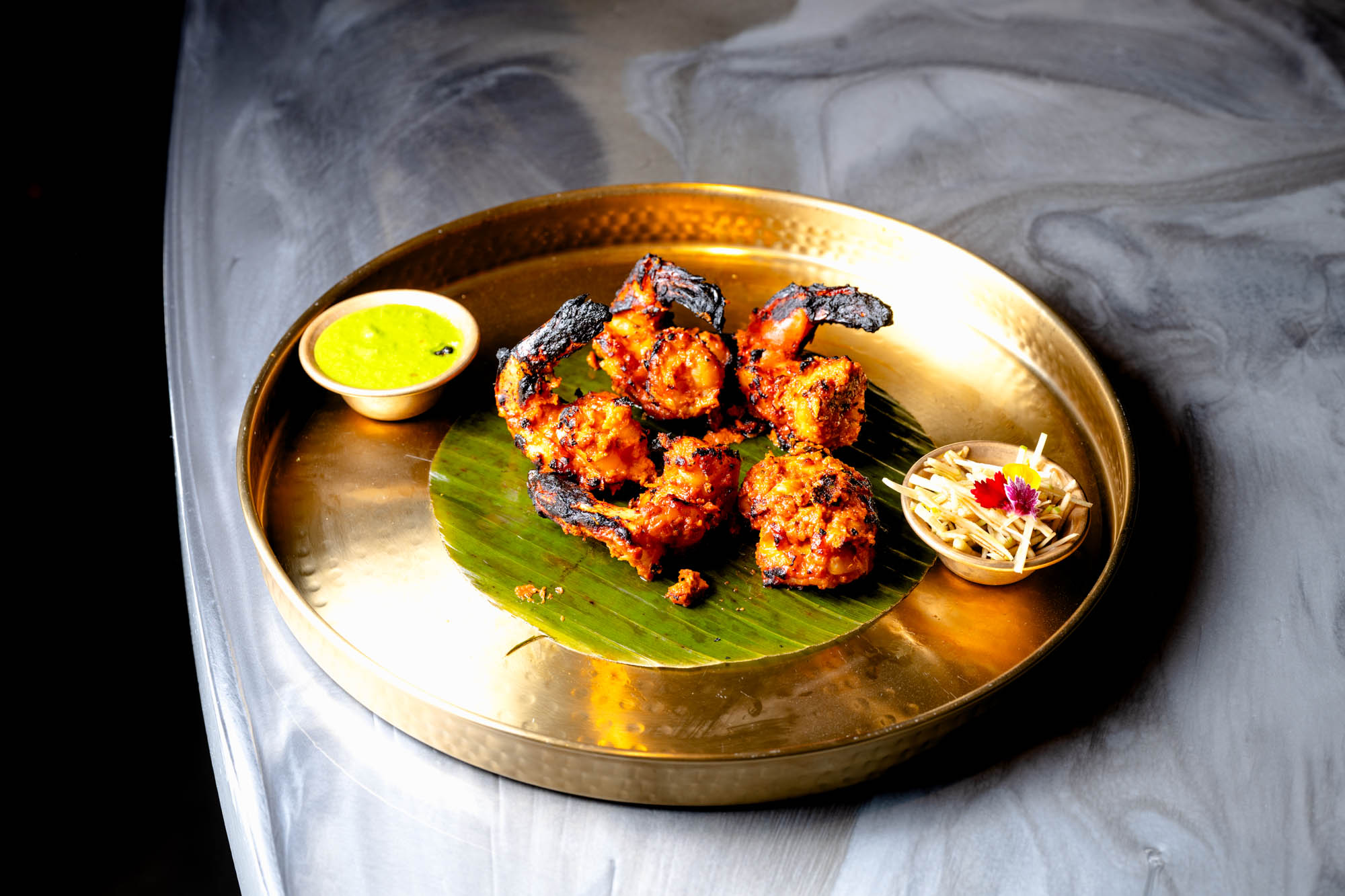
Sun-dried tomato prawns are a charred triumph of smoky flavor. Basted on the outside with an apple fennel balsamic sauce, it captures all the comfort of the more common tandoori chicken, but with the lightness of seafood. The server slides the prawns off the skewer tableside, then places them on a lovely bronze tray. Keep in mind, prawns are quite a bit larger than shrimp. This dish, which comes with a mint chutney on the side, is a hearty serving of protein.
The Sikandari Raan checks the box for those who crave even more animal protein—or who want an entree big enough to share. This tender plate of slow-cooked lamb comes wrapped around a bone like a prehistoric still life. It has a bit of a vindaloo flavor profile, with a prominent hint of smoked chili. On the side, a good, clean blend of seasonal vegetables.
Though simple in concept—mainly rice, spices, protein—biryani dishes are often some of the most complex in Indian cuisine. At Ganges, Chef Sakpal takes it a step further by finishing the dish with a flaky puff pastry crust topped with fennel and sesame seeds. The crust rolls over the edges of the bowl, leaving the biryani inside to steam and compound its flavors even more. This novel, pie-like fusion is most often found in Britain. Good luck finding it prepared this way anywhere else in southwest Florida. Or in the Southeastern United States, for that matter. Try the ghost biryani (the one with lamb) for an even richer flavor.
The true star of the entree offerings is arguably the Chilean sea bass cafreal. Like several dishes at Ganges, this one gets a bit of a tableside presentation. Wrapped in banana leaves, the tender cut of fish is revealed with a few scissor snips. Inside, a generous cut of sea bass enveloped in a deep green cafreal marinade, a tangy, mildly spicy blend of cilantro, chilies and—you guessed it—aromatics. The Portuguese-influenced cafreal marinade is typically reserved for chicken. Here, it adds a wonderful punch to a mild, flaky fish that’s the blank canvas for many a fusion dish. The accompanying pineapple mango salsa and beetroot malai sauce bring an amount of flavors that’s, frankly, difficult to describe. Earthy, herbaceous, tangy, sweet, a bit spicy—it’s everything all at once.
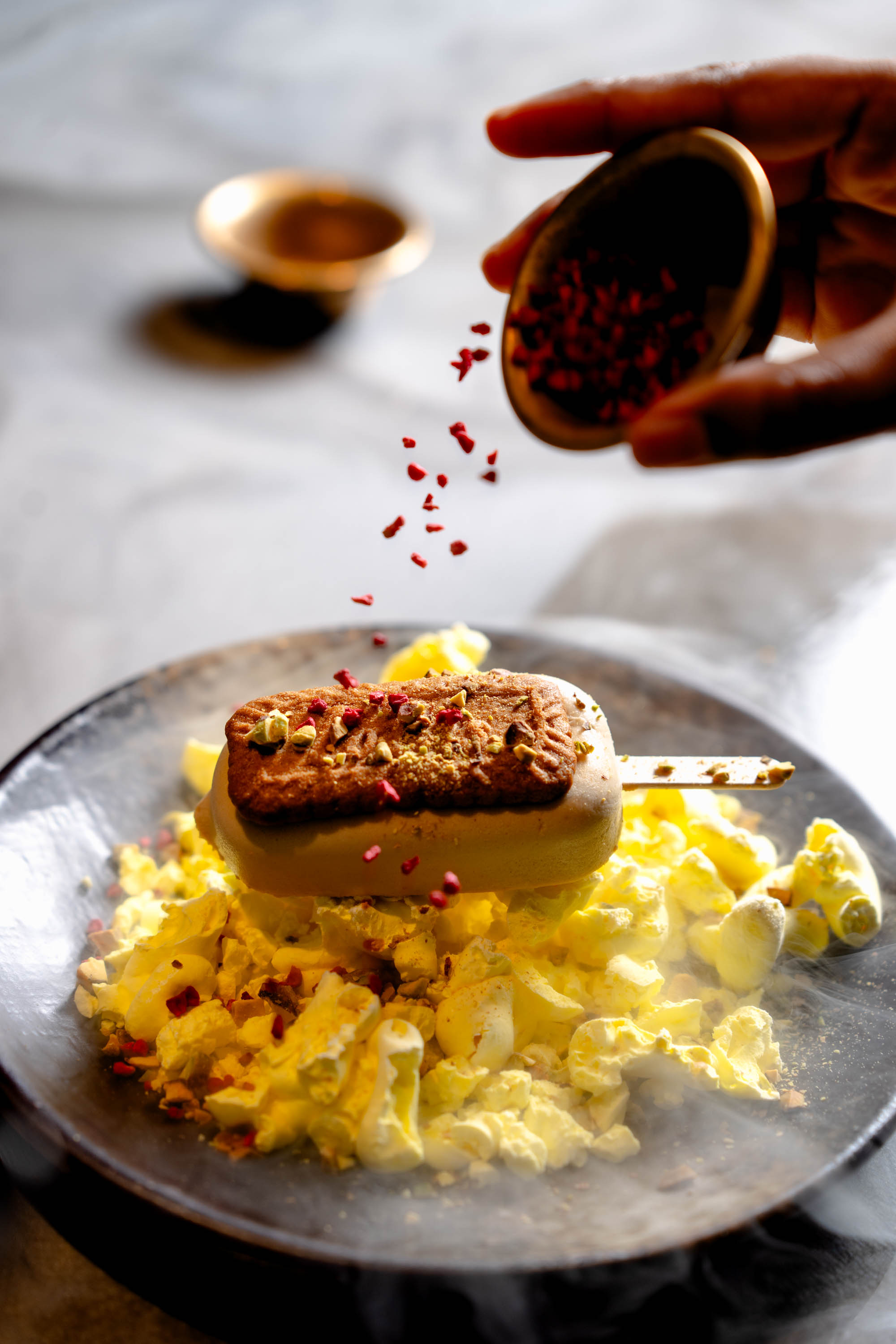
Desserts are no afterthought. The lotus kaapi-misu looks like a science experiment and eats like a fudge popsicle on a bed of frozen custard. It arrives in two parts. One, a large glass bowl brimming with a cold fog. That’s the saffron-spiced basundi, a creamy, sweetened milk that’s flash-frozen by liquid nitrogen. The second part is a coffee sabayon that looks like a fudge popsicle, topped with a Lotus biscuit (the kind you get on airplanes). The basundi is scooped out of the liquid nitrogen onto a plate, then smashed into bits with a spoon. The sabayon is laid on this bed of melt-in-your-mouth, custard-like candy, then the whole thing is drizzled with salted toffee syrup and dehydrated raspberry.
At Ganges, the flavors are perhaps some of the most adventurous in Sarasota, the presentation among the most exciting. But, like the Hindu Festival of Colors, it’s the bright pinks and greens and yellows and oranges that truly set this menu apart. So, eat first with your eyes. Then take a bite and close them. SRQ